As a professor of the Old Testament, I begin my classes by asking for students’ views of God. Without fail, the intensity of God’s judgment surfaces. Someone always asks, “If He is loving, why does God judge His people so harshly?”
And it’s true. God’s judgment can be shocking. From Scripture, we know such events as the destruction of the Canaanites, a global flood, and the exile of Israel were all ordained by God Himself. In Amos, God told the nation of Israel, “I sent plagues among you as I did to Egypt. I killed your young men with the sword, along with your captured horses. I filled your nostrils with the stench of your camps …” (Amos 4:10).
When we read those words, we struggle to reconcile a loving God with one who judges His own people. We are tempted to cast our own judgment by crying out, “How dare He do that? That is so wrong!”
But God’s actions are undeniable, printed in the pages of the Bible. So how should we process these events?
Before we cast God in the role of “angry punisher,” we should ask ourselves some questions.
Who is the Judge behind the judgment?
When you hear the word ‘judgment,’ what comes to mind? Maybe you picture a high-profile court case weighed by a jury. Or even a disapproving family member with impossibly high standards. In today’s environment, the word “judgment” carries some extremely negative connotations. We typically go out of our way to avoid being labeled as “judgmental.”
But the Bible does not cast us in the role of the “ultimate judge.” That position is reserved exclusively for God. So before we ask the question, “why would God …”, we have to begin by asking “Who is God?”
God is not a human jury, weighed down by preconceived notions or flexible standards. He is not the disapproving family member who judges others to elevate Himself. He is divinely perfect, free from the hindrances of our human failures.

Our understanding of God’s judgment must be grounded in the very attributes of who He is. An attribute is simply something that is true about God. From His Word, we know God is three-in-one, self-existent, immutable, infinite, eternal, self-sufficient, omniscient, wise, omnipresent, transcendent, faithful, good, just, merciful, gracious, loving, holy, and sovereign.
God is all of these and more, simultaneously, all the time. If we are truly seeking to understand God’s judgment, we have to unpack the character of the judge Himself. When we do, we can acknowledge that God’s judgment is God’s, not ours.
Is judgment really part of God’s character?
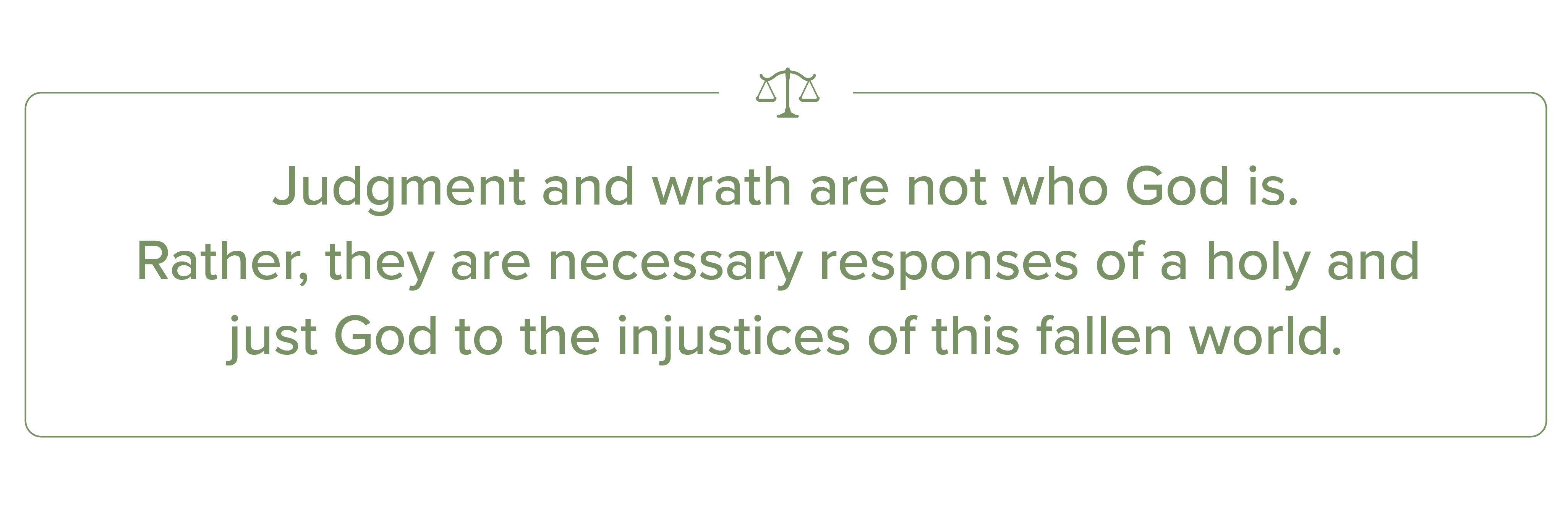
In exploring God’s character, we must separate God’s actions from His attributes. “Judgment” or “wrath” are not listed as attributes of God. They are not fundamental elements of God’s character. Instead they are necessary responses born of His character. In the face of injustice, a just God casts judgment. Confronted by unholiness, a holy God responds.
God’s responses are never random. In His judgment, God remains fully faithful, merciful, gracious, and loving. He is fully God in every moment.
In Amos 4:10, God’s judgment may feel extreme. The language is strikingly vivid.
But God’s extreme measures in verse 10 are in response to the people’s extreme sin. Through Amos, we know that the people worshiped false gods; rejected God’s law; and exploited, even “crushed,” the poor and needy. Faced with the wreckage of human sin, God responded.
True to His character, God delivered justice for the poor and needy. He remained consistent, doing what He said He would do. And through it all, He extended mercy to the guilty. Throughout Amos 4, God repeated the refrain, “… yet you have not returned to me.” In His grace and compassion, God called the people back to Himself again and again. God’s purpose in judgment was not destruction, but reconciliation. His motivation was not revenge, but compassion. He wasn’t wielding his power and justice merely as punishment, but as invitation.
In every ounce of rendering judgment, God calls to his people, “Come back to me.” His perfect character never wavers.
Does God take His judgment too far?
We may accept that God’s character is perfect but still struggle when His judgment feels extreme. Why does God judge the people He claims to love? On the surface, we may believe that a God without judgment is a God of love. But when we really consider the evils of this world, no one wants a God who simply looks the other way.
Just ask the parent of a child who has been abused or the spouse who has been widowed through an act of violence. No one wants a God who casts the victim aside and looks at a perpetrator saying, “We need to be a little nicer.” That is not loving.
When we see the evils of this world, we want justice. We want a God who is both gracious and just – a God who judges evil even while He offers grace to the perpetrator. We want loving justice and love that is just.

As humans we are simply too flawed to offer this perfect blend of love and justice. It is impossible. Only God can accomplish that work. And in His mercy, He did so through Jesus’ death on the cross. God’s ultimate judgment for humanity’s evil rained down, not on us, but on Himself in the person of Jesus. In that moment, He was condemned so that we might live. God’s perfect love and perfect justice collided, resulting in eternal grace for those who believe.
So perhaps God is challenging us to ask a new question. Instead of “Why does God judge the people He loves?” maybe we should ask, “Can I trust the One who judges?” When we reflect on His full character and honestly seek to know Him, we discover that He alone can deliver true justice. And He does so in perfect love.