Have you ever read a passage in Scripture and felt like you were missing something? You understood the words but sensed there was more meaning to discover. When we understand the historical context behind our Bible study, we gain a richer perspective of God’s truth.
This year in BSF we will explore Exile & Return—a journey through the Old Testament books of Ezra, Nehemiah, Haggai, Zechariah, Malachi, and more. At first glance, these books may feel distant. Foreign names, unfamiliar places, and ancient conflicts can seem disconnected from modern life. But when we study them in their historical setting, we begin to see a compelling picture of God’s faithfulness through the ages—and the relevance of His message for our lives today.
Why Historical Context Matters
Every book of the Bible was written in a specific time to a specific people facing specific challenges. Knowing those details doesn’t just help us understand what is being said, it helps us understand why it matters. Historical context bridges the gap between “then” and “now.”
Two Simple Tools: Timelines and Maps
Timelines: See God’s Work Over Time
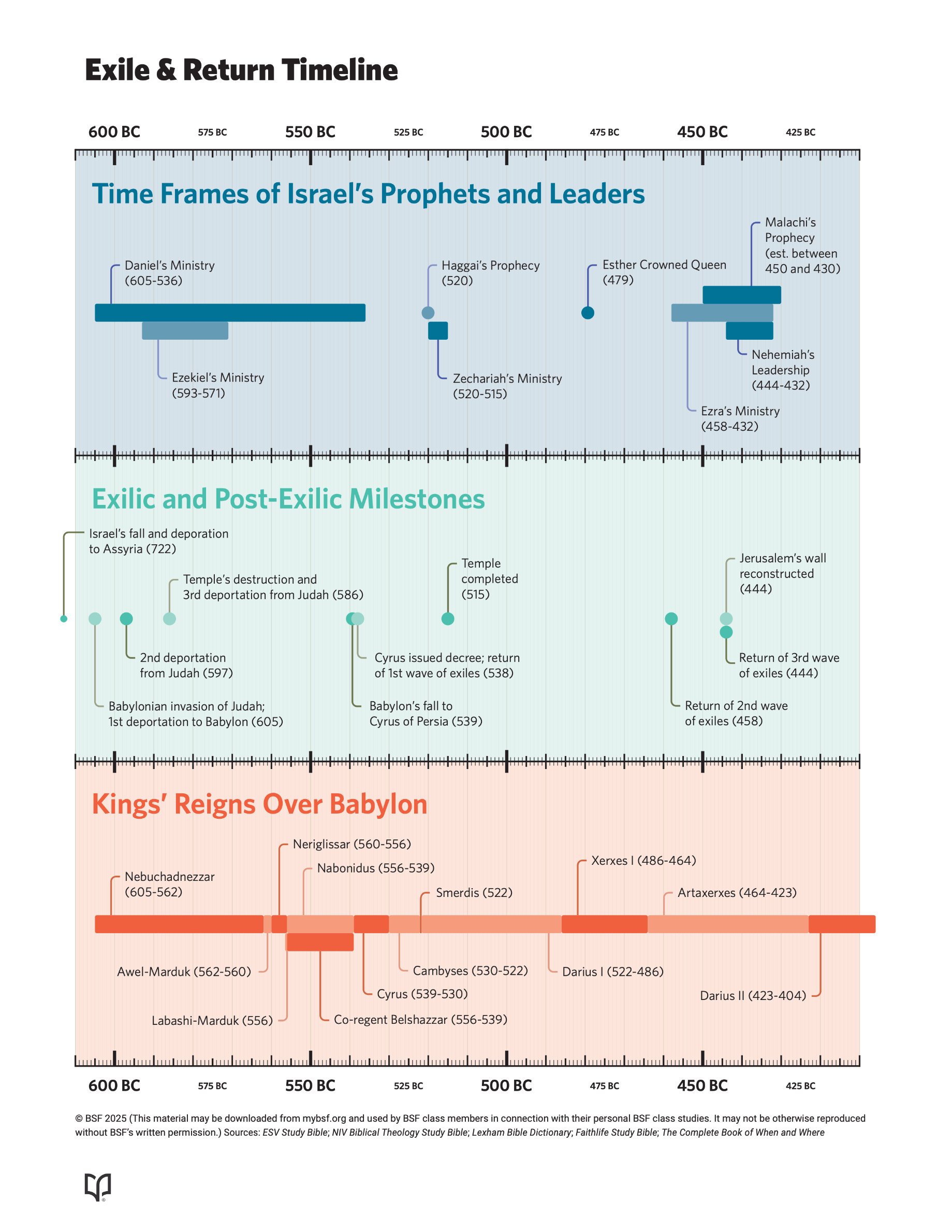
In BSF’s Exile & Return study, timelines help us piece together the chronology of kings, empires, prophets, and promises. Books of the Bible, read on their own, are certainly meaningful. But when we read them in the context of time, we see God at work in remarkable ways.
When God called Ezekiel to offer a message of hope to exiles on the outskirts of Babylon, He also placed Daniel in the heart of the city, standing firm for his faith before kings and officials.
While God worked through leaders like Zerubbabel and Ezra to rebuild His temple and restore worship in Jerusalem, He placed Esther in a position of influence to rescue His people in Persia.
God’s work on behalf of His people is not isolated to one place, one time, or one culture. Timelines remind us that God works beyond what we can see to accomplish His plans and purposes in ways we could never imagine.
Maps: See How God Moved
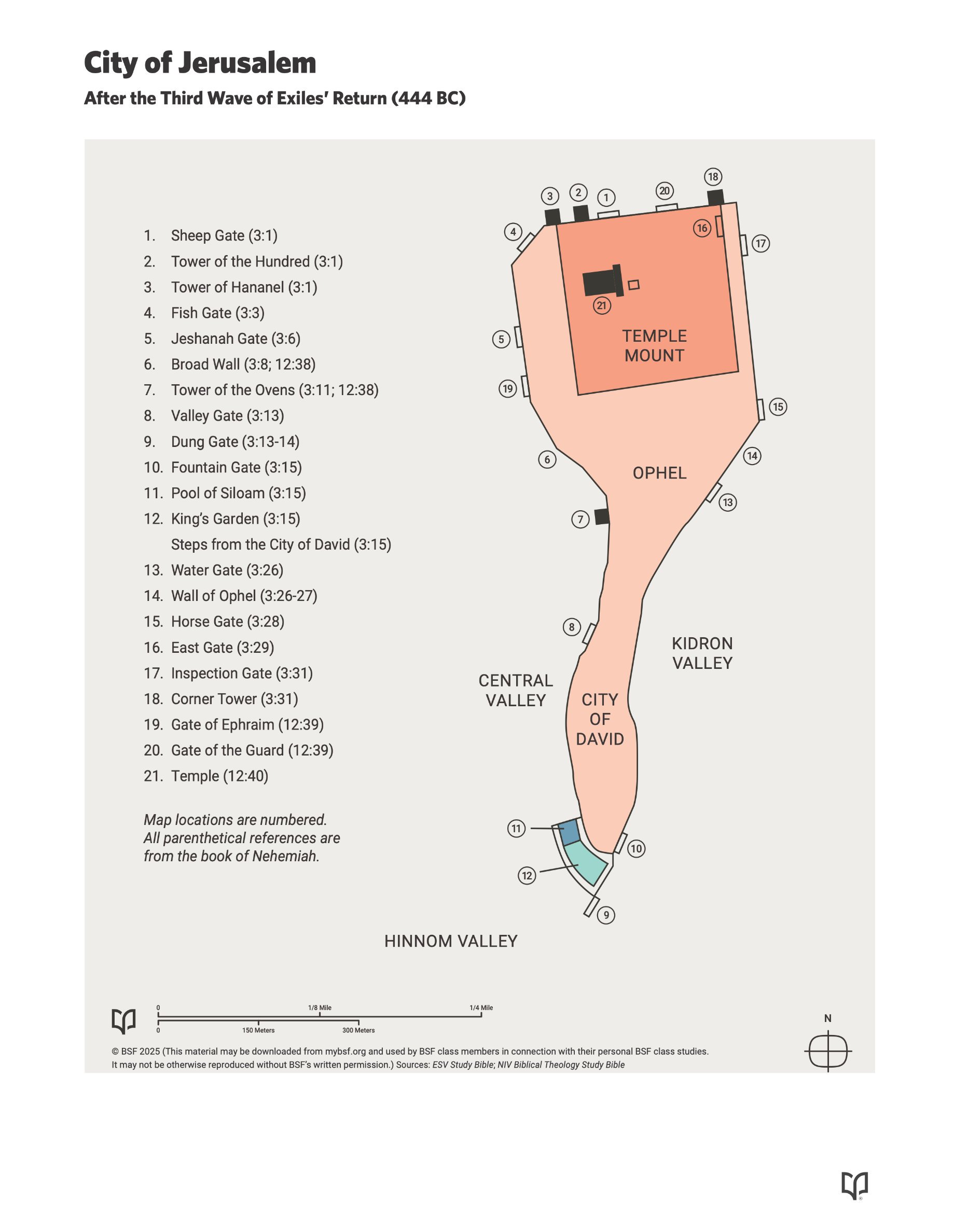
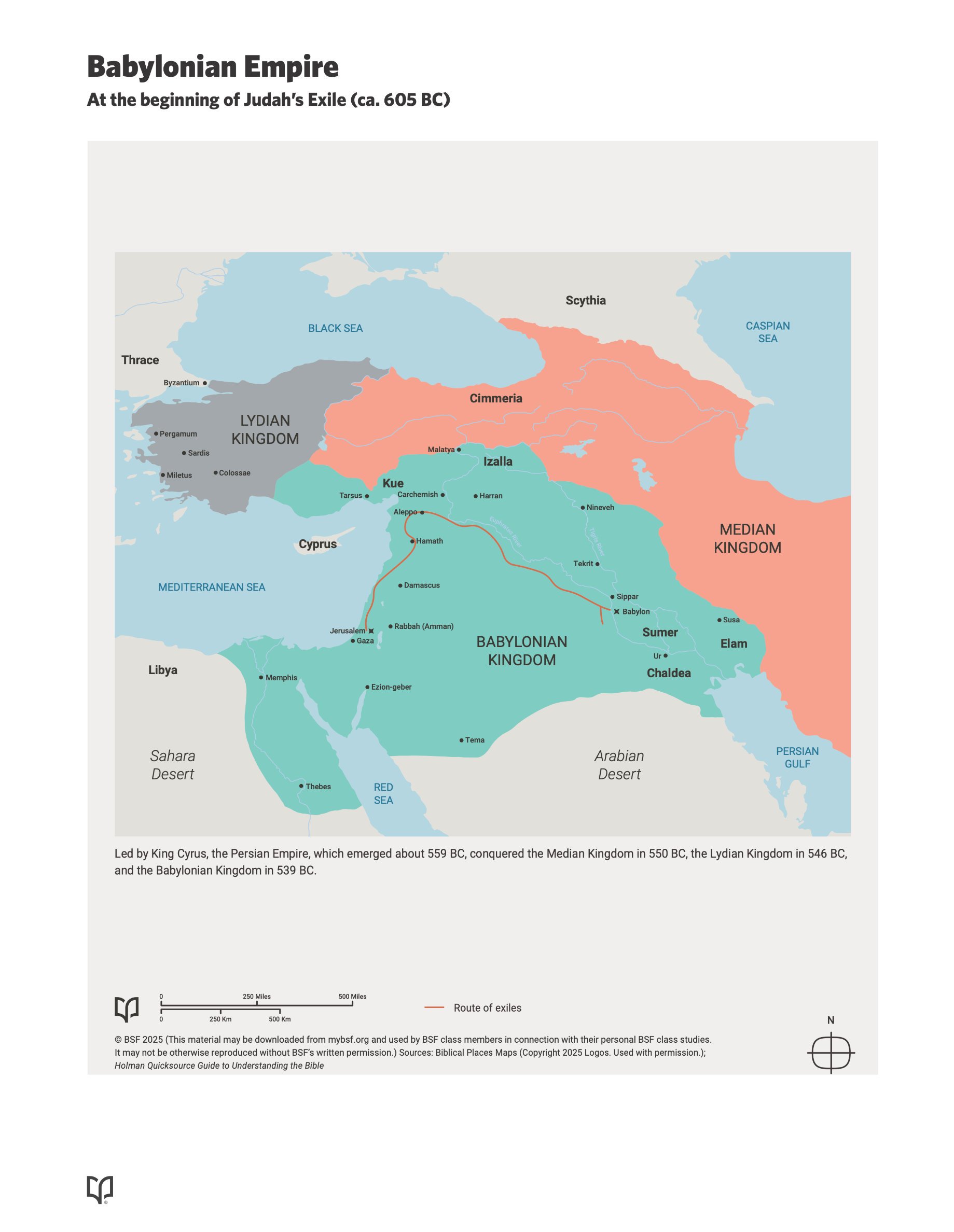
Alongside timelines, maps give us this same view of God’s sovereignty, power, and care for His people. From caves and valleys to capital cities, God sent prophets to draw His people back to Himself. From Jerusalem to Persia, from Babylon to Aleppo, God never abandoned His people.
In Exile & Return, thousands of men, women, and children travel hundreds of miles back to Jerusalem. When we place this journey on the map, we can visualize the challenges they must have experienced. When we combine our study of Scripture with looking at maps, we discover that God provided for His people every step of the way. Through hills and valleys, weather challenges, and enemy territory, God never abandoned His people.
When we see how God moved through the chaos of history to keep His promises, we remember that He is doing that same work today. The God who drew near to Ezekiel and Daniel is the same God who pursues us today. The God who used Ezra to lead His people and Esther to save them is the God who equips and calls His people right now.
In this year’s study, we’ll explore timelines, background notes, and maps to frame our understanding. Because the more we know about the world behind the text, the more deeply we meet the God within it. As you study during the BSF break or prepare for Exile & Return, take time to explore the context behind chapters and verses. You may just discover more than you expect.